
The Relationship Between Hull Coatings and Underwater Hull Cleaning on Commercial Ships
For commercial shipping companies, maintaining a clean hull is only one part of an effective maintenance strategy. Equally important is protecting the vessel’s antifouling coating, which serves as the first line of defense against marine growth, corrosion, and increased hydrodynamic resistance.
Many vessel operators view underwater hull cleaning and hull coatings as separate maintenance activities. In reality, they work together as part of the same performance strategy. A high-quality coating without proper maintenance will eventually lose effectiveness, while aggressive cleaning techniques can shorten the life of even the most advanced coating systems.
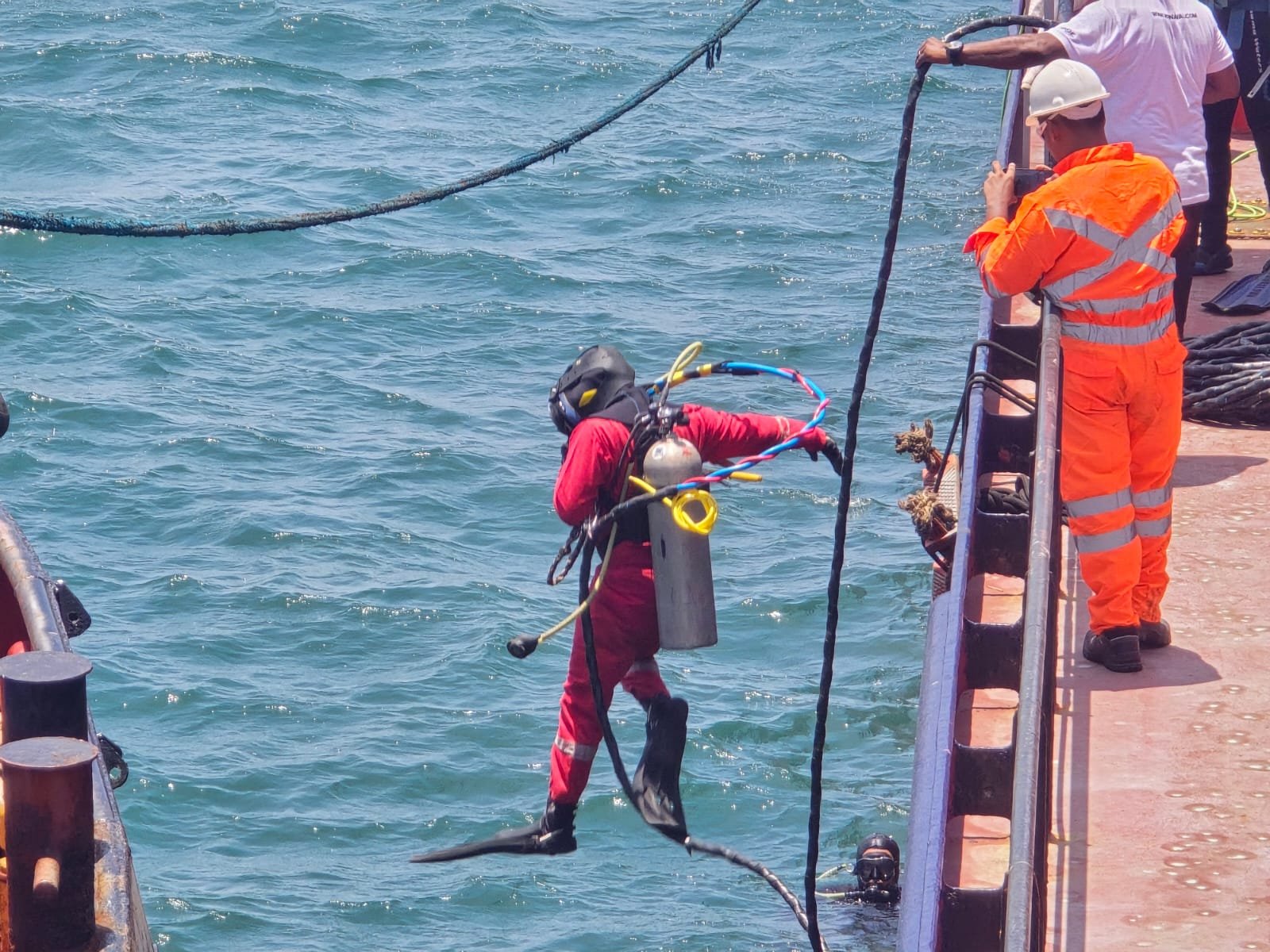
Aquadiver Panamá specializes in underwater hull cleaning for commercial cargo vessels, using cleaning methods designed to preserve hull coatings while restoring optimal vessel performance.
What Is an Antifouling Hull Coating?
An antifouling coating is a specialized protective paint system applied to the underwater portion of a vessel’s hull. Its primary purpose is to minimize the attachment of marine organisms such as algae, slime, barnacles, mussels, and other fouling species.
Modern commercial vessels invest significant resources in advanced coating systems because biofouling directly impacts operational efficiency.
These coatings help:
- Reduce marine growth
- Minimize corrosion
- Improve fuel efficiency
- Protect steel structures
- Reduce maintenance frequency
Why Hull Coatings Matter for Commercial Ships
Every additional layer of marine growth increases friction between the hull and the surrounding water.
This increased resistance forces propulsion systems to work harder to maintain service speed, resulting in:
- Higher fuel consumption
- Reduced voyage efficiency
- Increased greenhouse gas emissions
- Higher engine workload
- Reduced profitability
Antifouling coatings delay this process by making it more difficult for marine organisms to adhere to the hull surface.
The Different Types of Hull Coatings
Self-Polishing Copolymer (SPC)
SPC coatings gradually release biocides while the vessel operates, continuously exposing fresh protective surfaces.
These coatings are commonly used on large commercial cargo vessels because they provide consistent long-term protection.
Silicone-Based Fouling Release Coatings
Rather than killing marine organisms, these advanced coatings create an extremely smooth surface that makes attachment difficult.
They are particularly effective on vessels maintaining regular service speeds.
Hybrid Coating Systems
Some operators choose hybrid technologies that combine biocidal protection with fouling-release characteristics to maximize coating performance.
How Improper Hull Cleaning Can Damage Coatings
Not all underwater hull cleaning methods are the same.
Aggressive cleaning using inappropriate equipment may:
- Remove protective coating layers
- Create premature coating wear
- Expose bare steel
- Accelerate corrosion
- Reduce dry dock intervals
For this reason, underwater cleaning should always be adapted to the specific coating installed on the vessel.
A Condition-Based Cleaning Approach
At Aquadiver Panamá, every cleaning project begins with an underwater assessment.
Divers evaluate:
- Marine growth density
- Coating condition
- Areas of localized deterioration
- Mechanical damage
- Previous cleaning patterns
This evaluation allows our team to determine the safest and most effective cleaning method.
Balancing Cleaning Frequency and Coating Life
One common misconception is that frequent cleaning always shortens coating life.
In reality, properly performed underwater hull cleaning often extends coating lifespan because light marine growth can be removed before it develops into heavy fouling that requires more aggressive intervention.
Cleaning at the correct intervals reduces mechanical stress on the coating while maintaining hydrodynamic performance.
The Cost of Waiting Too Long
Allowing heavy fouling to accumulate creates a difficult maintenance situation.
Large barnacles and shell growth require more intensive cleaning techniques that increase the risk of coating abrasion.
Additionally, severe fouling can hide localized coating failures that continue to deteriorate beneath marine growth.
Why Tropical Waters Require Special Attention
Panama’s warm tropical waters accelerate marine growth compared to many other trading regions.
Commercial vessels spending time at anchor before Panama Canal transit or cargo operations often experience rapid biofouling development.
This makes regular underwater assessments particularly valuable for ships operating in Central America.
Supporting IMO Environmental Goals
Maintaining effective hull coatings combined with professional underwater cleaning contributes directly to improved vessel efficiency.
Cleaner hulls reduce hydrodynamic drag, helping operators lower fuel consumption and support compliance with international environmental initiatives such as:
- Carbon Intensity Indicator (CII)
- Energy Efficiency Existing Ship Index (EEXI)
- MARPOL Annex VI
While coatings alone cannot guarantee compliance, they form an important part of an integrated efficiency strategy.
Integrating Hull Cleaning Into Preventive Maintenance
The most successful commercial operators treat underwater hull cleaning as a preventive maintenance activity rather than a reactive response to heavy fouling.
By combining routine inspections with scheduled cleaning, operators can:
- Extend coating service life
- Improve voyage performance
- Reduce fuel consumption
- Lower maintenance costs
- Improve operational reliability
Why Choose Aquadiver Panamá?
Aquadiver Panamá provides underwater hull cleaning services specifically for commercial vessels, including container ships, bulk carriers, tankers, LNG carriers, LPG carriers, Ro-Ro vessels, and general cargo ships.
Our experienced commercial divers evaluate each hull individually and select cleaning techniques compatible with the vessel’s coating system, helping preserve long-term coating performance while restoring hydrodynamic efficiency.
Operating across Panama’s principal commercial ports, Aquadiver supports fleet operators with timely underwater maintenance that minimizes operational disruption.
Hull coatings and underwater hull cleaning should never be viewed as separate maintenance activities. Together, they form the foundation of an efficient hull maintenance strategy that improves vessel performance, protects coating investments, reduces fuel consumption, and supports long-term operational reliability.
For commercial cargo ships operating in Panama, combining professional underwater inspections with coating-conscious hull cleaning provides measurable operational and financial benefits.
Contact Aquadiver Panamá today to schedule a professional underwater hull assessment and develop a maintenance strategy that protects both your vessel’s performance and its hull coating system.