
How Underwater Inspections Support Planned Maintenance Systems (PMS) on Commercial Cargo Ships
Modern commercial shipping relies heavily on Planned Maintenance Systems (PMS) to ensure vessels remain safe, reliable, and operational throughout their service life. These digital maintenance programs allow shipping companies to schedule inspections, preventive maintenance, and equipment servicing based on operational hours, manufacturer recommendations, and historical performance.
However, one area is often underestimated within many PMS programs: the submerged structure of the vessel. Hull plating, propellers, rudders, sea chests, sacrificial anodes, and other underwater components cannot be assessed during routine onboard maintenance. Without regular underwater inspections, maintenance plans are based on assumptions rather than actual condition.
This is where professional underwater inspections become an essential part of an effective Planned Maintenance System.
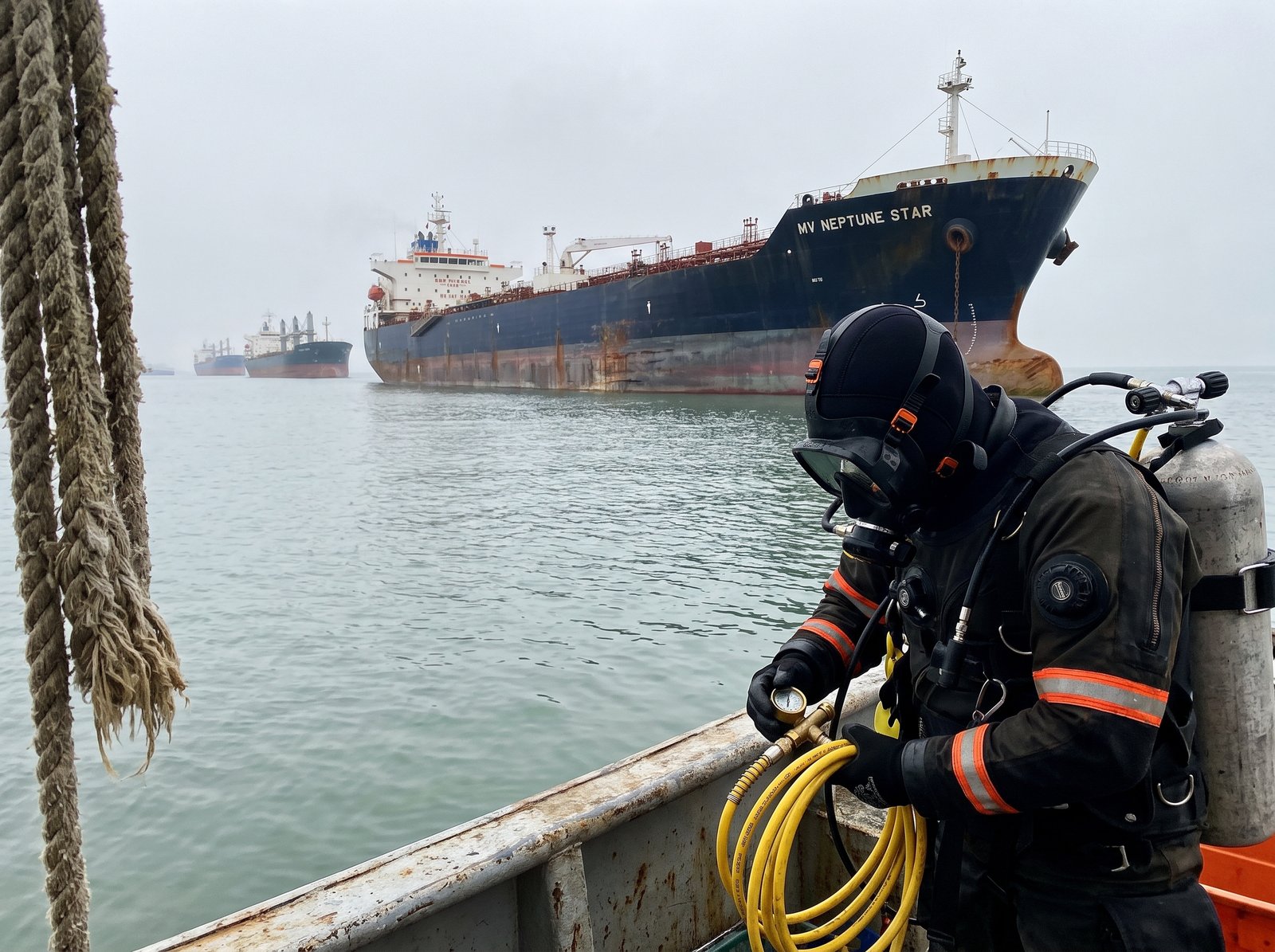
What Is a Planned Maintenance System?
A PMS is designed to organize maintenance activities before failures occur. Rather than waiting for equipment to break down, technical departments schedule inspections and servicing based on preventive maintenance principles.
The objective is to maximize vessel availability while reducing emergency repairs and operational disruptions.
The Missing Information in Many PMS Programs
Although PMS software tracks engines, pumps, generators, compressors, and navigation equipment, underwater structures often receive attention only during dry docking.
This creates a significant information gap regarding:
- Hull coating condition
- Marine growth development
- Propeller wear
- Anode consumption
- Sea chest blockage
- Structural corrosion
Turning Underwater Inspections into Maintenance Data
Regular underwater inspections provide valuable condition-based information that can be incorporated directly into maintenance planning.
Instead of relying only on fixed inspection intervals, technical managers receive current information that allows them to prioritize maintenance according to actual vessel condition.
Benefits for Technical Superintendents
- Improved maintenance forecasting
- Reduced emergency repairs
- Better dry dock planning
- More efficient maintenance budgets
- Historical condition records
Digital Documentation
Aquadiver Panamá provides inspection reports including HD videos, photographs, condition assessments, and recommendations that can be incorporated into vessel maintenance records.
Supporting Predictive Maintenance
Many shipping companies are moving toward predictive maintenance strategies. Underwater inspection reports provide essential field data that supports these initiatives.
Conclusion
Professional underwater inspections should no longer be considered isolated maintenance activities. They are valuable sources of operational intelligence that strengthen Planned Maintenance Systems and improve long-term fleet reliability.
Learn more about Aquadiver Panamá underwater inspection services.