
How Regular Underwater Inspections Reduce Operational Risk for Commercial Cargo Vessels
In commercial shipping, operational risk is one of the biggest threats to profitability. Unexpected underwater damage, propulsion failures, corrosion, or structural deterioration can trigger delays, insurance claims, emergency repairs, and regulatory complications.
For this reason, more shipping companies are implementing regular underwater inspection programs as part of their operational risk management strategy.
Aquadiver Panamá provides underwater inspection services specifically designed for commercial cargo vessels operating in one of the busiest maritime regions in the world.
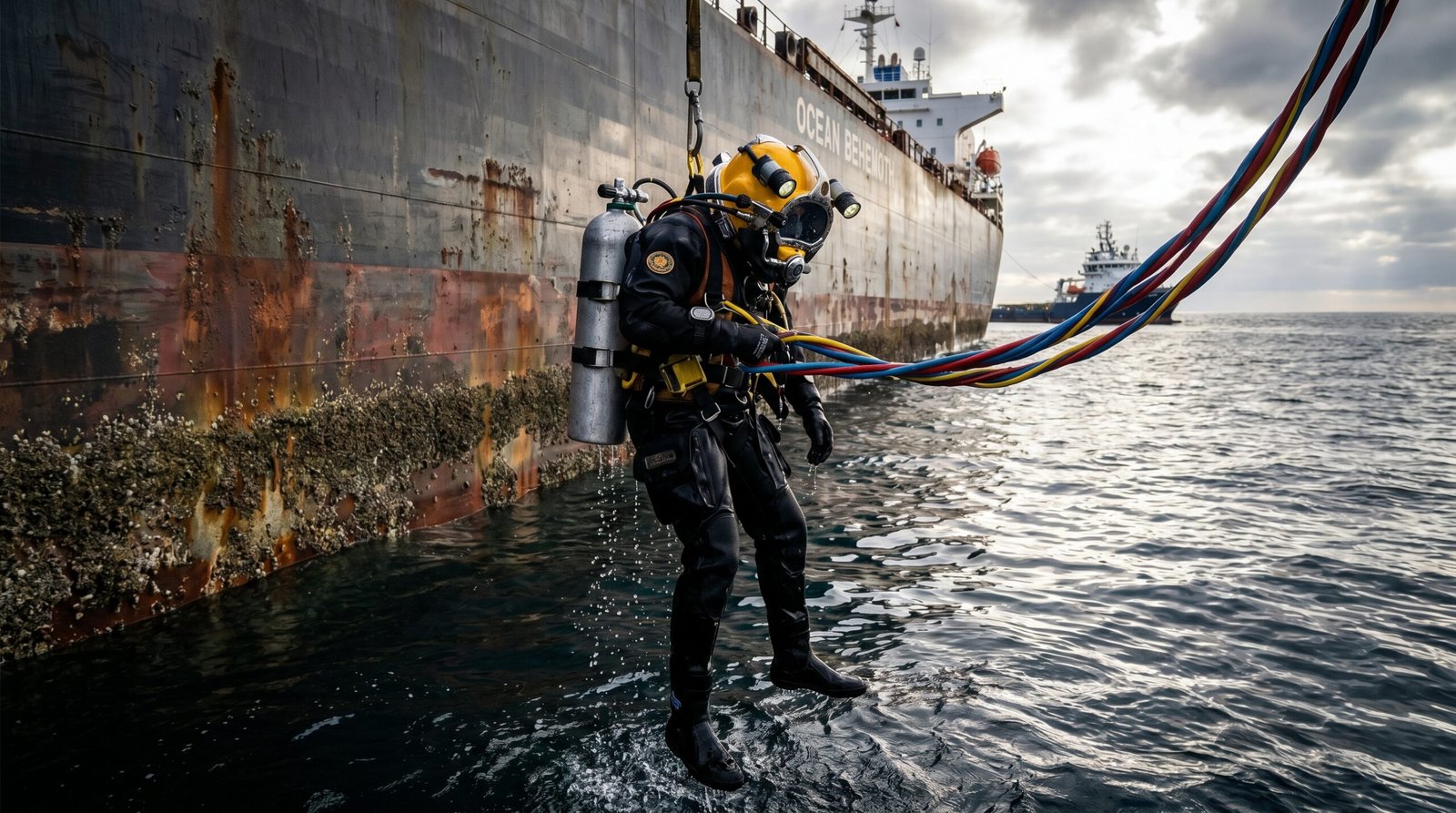
Why Operational Risk Starts Below the Waterline
Many of the most serious vessel problems begin in submerged areas that are impossible to evaluate during daily operations.
These include:
- Hull corrosion
- Propeller damage
- Loose anodes
- Sea chest obstruction
- Structural coating failure
Without regular inspections, minor issues can evolve into major incidents.
1. Preventing Unexpected Mechanical Failures
Underwater inspections help identify early-stage problems before they affect vessel operations.
For example:
- Propeller blade deformation may increase vibration
- Blocked sea chests may affect engine cooling
- Corroded hull areas may weaken structural integrity
2. Reducing Insurance Exposure
Insurance claims involving underwater damage often require evidence of proper maintenance practices.
Routine inspections provide:
- Maintenance documentation
- Condition history records
- Visual evidence of vessel condition
This helps operators demonstrate proactive maintenance management.
3. Supporting Charter Reliability
Unexpected underwater problems can interrupt schedules and damage relationships with charterers.
Regular inspections improve operational reliability by reducing the risk of sudden failures.
4. Improving Maintenance Forecasting
Inspection reports allow technical managers to:
- Prioritize repairs
- Schedule interventions strategically
- Avoid emergency dry dockings
5. Enhancing Crew Safety
Structural or propulsion-related failures may create onboard safety hazards.
Preventive underwater inspections help reduce exposure to emergency situations during voyages.
Why Panama Is a High-Risk Environment
Heavy maritime traffic, tropical waters, and long anchorage periods accelerate fouling and underwater wear in Panama.
Frequent inspections are especially important for cargo vessels operating through the Panama Canal corridor.
What Aquadiver Inspections Include
- HD underwater video documentation
- Hull condition analysis
- Propeller and rudder inspection
- Anode condition verification
- Sea chest evaluation
Benefits of a Routine Inspection Program
- Lower operational risk
- Reduced emergency repair costs
- Improved insurance positioning
- Better maintenance planning
- Greater fleet reliability
Regular underwater inspections are not just maintenance procedures—they are operational risk management tools.
Aquadiver Panamá helps cargo vessel operators protect assets, reduce uncertainty, and maintain safer, more reliable maritime operations.
Contact us to implement a preventive underwater inspection program.